When you’re done learning about the History of Playing Cards, check our “History Happens Every Day” Calendar here …
18
Sep
2026


When you’re done learning about the History of Playing Cards, check our “History Happens Every Day” Calendar here …
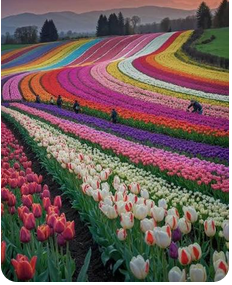
Nothing announces the arrival of spring quite like the vibrant, unmistakable silhouette of a blooming tulip. Whether scattered across a meticulously planned garden bed or arranged neatly in a vase on the kitchen counter, tulips bring an effortless elegance to any space. But beyond their colorful petals lies a fascinating botanical history of ancient mountains, royal palaces, and economic frenzy.
Continue reading →The standard 52-card deck we use today didn’t arrive all at once. It is the result of a global evolution that spanned over a thousand years, shaped by trade routes, mass-production technology, and local gaming cultures.
Long before they were used for high-stakes poker or rainy-day solitaire, playing cards were a revolutionary fusion of art, mathematics, and social commentary. Small enough to fit in a pocket but deep enough to host infinite strategic possibilities, the history of playing cards is a story of global migration and cultural evolution.
Continue reading →Few things in nature carry as much emotional, cultural, and historical weight as the rose. Today, we might view them as a classic Valentine’s Day gesture or a beautiful addition to a backyard garden. But the story of the rose spans millions of years, crossing continents, toppling empires, and shifting from a rugged wild survivalist to the ultimate symbol of romance.
The tomato is perhaps the most successful “immigrant” in culinary history. Today, it is the backbone of Italian sauces, Spanish gazpacho, and American salads, but for centuries, it was viewed with deep suspicion—or used merely as a decorative table ornament.
The journey from a wild, pea-sized berry in the Andes to a global dietary staple is a saga of mistaken identity, royal curiosity, and scientific breakthroughs.
Continue reading →For many, the sunflower is the quintessential symbol of summer—a towering, bright yellow bloom that follows the sun across the sky. But beyond its cheerful appearance and tasty seeds lies a history spanning thousands of years, traveling across continents and playing a pivotal role in the rise of empires, the evolution of art, and the global food industry. The story of the sunflower (Helianthus annuus) is one of transformation, from a wild North American weed to a global agricultural powerhouse.
Continue reading →Most people don’t realize the amazing amount of history and engineering behind a simple deck of cards. Over the last 1000+ …
Richard Middleton a United States soldier was attending worship services and instead of taking out a Bible, he spread out a complete deck of cards in front of him. When an officer told him to put them away he refused the directive. He was brought before the major because the refusal was considered indecent behavior. When Middleton was asked for an explanation he was told if he could present an acceptable explanation there would be no penalty.
Continue reading →Crafting—the art of making things by hand with skill, care, and creativity—has been part of the human story since our ancestors first chipped stone into tools. Today, in an era of 3D printers and mass-produced goods, millions turn to knitting, pottery, woodworking, and digital maker projects for joy, mindfulness, and connection. But this isn’t a new trend. Crafting stretches back over two million years, evolving from survival necessities into cultural expressions, economic engines, and artistic rebellions. Its history reveals how humans have always shaped the world with their hands—and why that impulse endures.